
What Type of Blood Tests Should You Get Regularly? And How Frequent?
Physical Health

Many people wonder whether they should be getting routine or preventative blood work every year. Others ask if there are specific tests they should request from their physician. The answer isn’t always straightforward. While blood tests can be valuable tools for detecting disease early and monitoring overall health, not everyone needs the same tests or the same testing schedule.
Blood tests can identify health problems in the earliest stages, before symptoms develop. Conditions such as diabetes, high cholesterol, thyroid disease, anemia, kidney disease, and liver disorders often cause few or no symptoms in their early stages.
However, more testing isn’t always better. A false-positive test may trigger a costly “cascade of care” with patient anxiety, follow-up tests, appointments, specialist referrals, and invasive medical procedures that may not provide any benefit. As well, routine tests may find abnormalities or diseases that are slow-growing or would never have caused any problems in your lifetime, perhaps leading to unnecessary testing and treatments.
In the United States, there is no single national guideline that dictates routine blood work types or frequency. However, the most authoritative source for recommendations is the United States Preventive Services Task Force (USPSTF), which bases its recommendations on your age, gender, risk factors, and health conditions. The Centers for Disease Control and Prevention (CDC) also provides guidelines and recommendations for some tests.
Medicaid and private health insurers may limit how often you can get routine blood tests if you don’t have symptoms to justify the tests. They generally limit blood test coverage to “reasonable and customary” frequency. For most preventative blood tests (i.e., tests that are used for health screening in people who do not have any symptoms or are not used to monitor health conditions or medication use), they limit coverage to every 12 to 24 months.
The best blood-testing plan for you depends on your age, gender, health history, family history, risk factors, and medications. Some tests are recommended for nearly everyone, while others are only useful in certain situations. Let's explore the most common blood tests, what they measure, and how often they should be performed and for whom.
Complete Blood Count (CBC)
A complete blood count (CBC) is one of the most ordered blood tests. It measures:
- Red blood cells
- White blood cells
- Hemoglobin
- Hematocrit
- Platelets
- Other measures of blood health
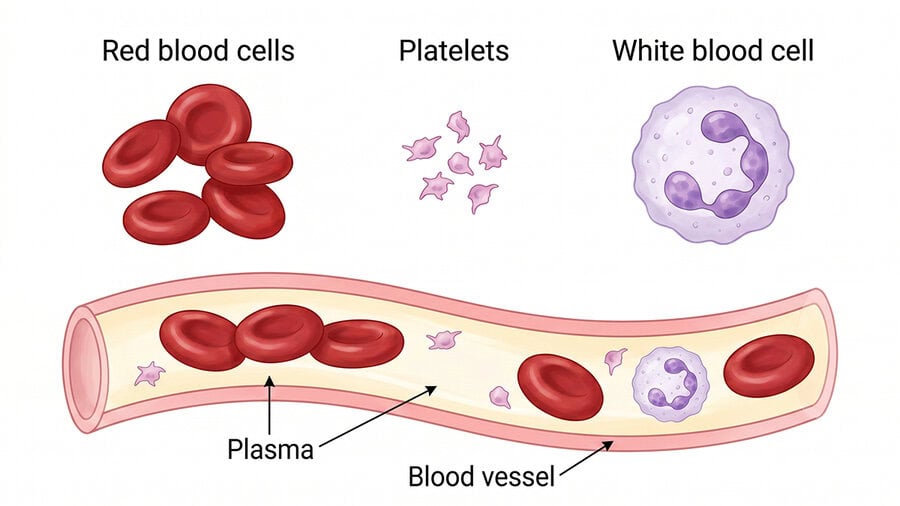
A CBC can help detect:
- Anemia
- Infection
- Inflammation
- Blood disorders
- Some cancers
How Often?
The USPSTF and CDC don’t recommend routine testing with a CBC for healthy adults without symptoms. However, many physicians will offer healthy adults a CBC every 1 to 3 years.
Blood Sugar Testing
High blood sugar can develop for years before symptoms appear. The most common tests used to test for prediabetes (elevated blood sugar, but not yet at the level of type 2 diabetes) and type 2 diabetes are:
- Fasting blood glucose
- Hemoglobin A1c (HbA1c) (reflects average blood sugar levels over approximately 3 months)
How Often?
The USPSTF recommends screening for prediabetes and type 2 diabetes every 3 years for adults aged 35 to 70 who are overweight or obese. All pregnant women should be screened for gestational diabetes using a special test known as a glucose tolerance test. People with certain risk factors should be considered for earlier or more frequent screening. These risk factors include:
- Family history of diabetes
- Unhealthy dietary and lifestyle choices
- Polycystic ovary syndrome
- History of gestational diabetes
- Cardiovascular disease
- Persons from certain higher-risk racial groups
For healthy individuals with normal results, testing every 3 years may be sufficient. Patients with prediabetes often require annual monitoring.
Cholesterol and Lipid Testing
A lipid panel evaluates:
- Total cholesterol
- LDL (“bad” cholesterol)
- HDL (“good” cholesterol)
- Triglycerides
High LDL cholesterol and triglycerides and low HDL are major risk factors for cardiovascular disease.

How Often?
The USPSTF has no current recommendations for cholesterol and lipid testing. However, the CDC recommends that healthy adults with no known heart disease should have cholesterol testing at least once every 4 to 6 years.
More frequent testing may be appropriate for people who have risk factors for cardiovascular disease, such as:
- Diabetes
- Known poor cholesterol profile
- Known cardiovascular disease
- High blood pressure
- Smoking
- A strong family history of heart disease
Individuals receiving treatment with cholesterol-lowering medications (such as statins) should be considered to undergo testing every 3 to 12 months.
The CDC also recommends that children and adolescents be tested at least once between the ages of 9 and 11, and again between ages 17 and 21. Children with obesity or diabetes may benefit from more frequent testing.
Kidney Function Tests
Blood tests that assess how well your kidneys are functioning include:
- Creatinine
- Estimated glomerular filtration rate (eGFR)
- Blood urea nitrogen (BUN)
How Often?
Kidney disease often progresses silently until the advanced stages. However, the USPSTF doesn’t currently have enough evidence to support a recommendation for routine kidney function testing in adults with no symptoms and no risk factors for kidney disease.
The CDC recommends annual screening with kidney function testing for people at high risk for chronic kidney disease, which includes people with:
- Obesity
- High blood pressure
- Heart disease
- Diabetes
- Family history of kidney disease
The CDC recommends that those who have known kidney disease should work with their physician to arrange a personalized testing schedule.
Liver Function Tests (LFTs)
Blood tests to assess liver health and function include:
- Alanine transaminase (ALT)
- Aspartate aminotransferase (AST)
- Alkaline phosphatase (ALP)
- Gamma-glutamyl transferase (GGT)
- Bilirubin

How Often?
The USPSTF and CDC do not recommend routine liver testing for healthy individuals. Instead, LFTs are recommended on a case-by-case basis, depending upon symptoms, medications, or risk factors for liver disease.
Physicians may recommend periodic testing for people with:
- Symptoms that suggest liver disease
- Obesity
- Diabetes
- Regular alcohol use
- Medications that may affect the liver
- Risk factors for viral hepatitis (in which case they should also be tested for viral hepatitis)
Thyroid Function Tests
The thyroid gland helps regulate metabolism, body temperature, energy levels, and many other bodily functions.
The primary screening test for thyroid function is the thyroid-stimulating hormone (TSH) test. Sometimes physicians also order a free T3 or T4, which gives more detailed information.
How Often?
Routine screening remains somewhat controversial. The USPSTF doesn’t recommend routine screening for adults with no symptoms of thyroid dysfunction, and the CDC has no recommendation for routine screening. However, the American Thyroid Association suggests testing at age 35 and every 5 years thereafter.
Testing should be considered in the following circumstances:
- Symptoms of thyroid dysfunction (such as weight changes, hair loss, cold/heat intolerance, fatigue)
- Known thyroid conditions (re-test every 6 to 12 months)
- Thyroid medication use (every 6 to 12 months)
- Thyroid medication change (6 to 8 weeks after the change)
- Family history of thyroid disease
Vitamin B12 Testing
Vitamin B12 is tested simply by measuring its levels in the blood.
How Often?
The USPSTF has no recommendation for routine Vitamin B12 testing, and the CDC does not recommend routine Vitamin B12 screening for average-risk adults without symptoms. Testing is recommended only when risk factors or symptoms (such as fatigue, nerve dysfunction, or certain types of anemia) are present. Risk factors for vitamin B12 deficiency include the following:
- Gastric bypass surgery
- Crohn’s disease
- Taking metformin
- Taking acid-suppressing medications
- Vegetarian and vegan diet
- Age over 60
- Chronic alcohol use
- Celiac disease
When people are vitamin B12 deficient and taking supplemental vitamin B12, testing should be done to check levels every 2 to 3 months upon starting therapy, and annually after that.
Iron Studies
Testing to check your iron levels may include the following blood tests:
- Ferritin
- Iron
- Transferrin saturation
- Total iron-binding capacity (TIBC)

How Often?
The USPSTF and CDC don’t recommend routine testing for iron deficiency for healthy adults without symptoms of iron deficiency. Testing is recommended based on symptoms and risk factors rather than routine annual screening. The following symptoms may indicate iron deficiency:
- Pica (cravings for non-food items, such as ice or dirt)
- Sore tongue or cracks at the edge of the mouth
- Hair loss
- Brittle, spoon-shaped nails
- Symptoms of anemia (such as pale skin, fatigue, shortness of breath, lightheadedness)
People with the following risk factors should be considered for iron testing:
- Pregnancy
- Vegetarian or vegan diet
- Heavy menstrual bleeds
- Frequent blood donation
- Digestive issues that impair absorption (such as celiac/gluten intolerance)
Vitamin D Testing
Vitamin D plays a role in many body functions, most notably bone health. We can obtain vitamin D from the diet and through supplements, but because most of our vitamin D is synthesized in our skin by sun exposure, a lack of sun exposure may cause a deficiency. Vitamin D is tested using a blood test known as the 25-hydroxy vitamin D test.
How Often?
The USPSTF and CDC don’t recommend routine vitamin D testing for healthy adults with no symptoms of vitamin D deficiency. Vitamin D deficiency is usually symptomless, but may cause fatigue, bone pain, muscle cramps and weakness, and frequent illness.
However, testing is recommended on an as-needed basis for people with risk factors, such as:
- Metabolic bone disorders
- Chronic kidney disease
- Chronic liver disease
- Disorders of digestive absorption (such as Crohn’s disease or celiac disease)
- Osteoporosis
- Limited sun exposure to the skin (such as those who live in northern latitudes)
Inflammatory Markers
Inflammatory markers are proteins and other biochemicals that indicate whether your body is experiencing active inflammation. Active inflammation may indicate a health problem such as an infection, injury, or autoimmune disease. They may also indicate increased risk of cardiovascular disease. Inflammatory markers identify active inflammation but not the specific cause.
Inflammatory marker blood tests include:
- C-reactive protein (CRP)
- High-sensitivity CRP (hs-CRP)
- Erythrocyte sedimentation rate (ESR)
- Plasma viscosity (PV)
- Ferritin
- Fibrinogen
- Procalcitonin (PCT)

How Often?
While routine testing isn’t typically recommended for healthy adults without specific indications, I do tend to utilize these tests to assess inflammation in patients as the patient does not always experience early symptoms from inflammatory conditions. But specific indications for such tests may include the following:
- Increased risk of cardiovascular disease
- Severe infections
- Long COVID-19 evaluation
- Chronic inflammatory conditions (such as autoimmune arthritis)
- Symptoms of autoimmune disease or inflammatory disorders
Prostate-Specific Antigen (PSA)
PSA (prostate-specific antigen) is a blood test commonly used to help screen for prostate cancer. However, an elevated PSA level doesn’t necessarily mean that cancer is present. PSA levels can rise due to non-cancerous conditions such as benign prostatic hyperplasia (BPH), prostatitis, or recent prostate irritation. The use of PSA screening remains somewhat controversial because the test can produce false-positive results, leading to additional investigations such as prostate biopsies. In some cases, PSA screening may also detect slow-growing prostate cancers that would never have caused symptoms or affected a person's lifespan, potentially resulting in overtreatment.
How Often?
The USPSTF doesn’t recommend a set schedule for PSA testing; instead, they recommend a shared decision-making discussion with your physician. Your PSA testing decision should be personalized, based on your age and risk factors and your appetite for risk of false-positive results. This is a very personal decision for most patients.
Risk factors for prostate cancer include the following:
- Men with a family history of prostate cancer
- Black ancestry
- Family history of BRCA1 or BRCA2 genes, usually identified in women relatives with breast cancer
The USPSTF suggests that for men aged 55 to 69, the decision to undergo periodic PSA testing should be individualized, and that PSA testing should be spaced out every 2 to 4 years for those with normal results. They recommend that men age 70 and older don’t undergo PSA testing due to the risk of overdiagnosis and overtreatment.
Tests Are Not Part of Routine Screening
Many blood tests may provide little value unless there are specific symptoms, risk factors, or health conditions that require them. Nevertheless, they are often requested by patients as part of their routine screening bloodwork. Examples include:
- Testosterone levels
- Cortisol levels
- Hormone panels
- Tumor markers
- Food sensitivity testing
- Heavy metal testing
As always, a discussion with your physician is the best way to decide what tests are right for you.
Take-Home Message
There is no universal blood-testing schedule that applies to everyone. The most appropriate blood tests depend on your age, personal health history, family history, medications, and risk factors.
For many healthy adults, regular monitoring of blood sugar, cholesterol, blood counts, and kidney function provides valuable information about overall health. Other tests, such as thyroid studies, vitamin levels, or PSA screening, may be appropriate in specific situations.
The best approach is to discuss your personal risk factors with your physician and develop an individualized screening plan. Thoughtfully chosen blood tests can help balance between identifying health problems early and avoiding unnecessary investigations and expense.
References
US Preventive Services Task Force (USPSTF) website
Centers for Disease Control and Prevention (CDC) website
American Diabetes Association (ADA) website
Annals of Internal Medicine medical journal
Journal of the American Medical Association medical journal
World Health Organization (WHO) website
Canadian Digestive Health Foundation website
American Family Physician medical journal
American Thyroid Association website


