
All Vtama Cream Questions Answered: Uses, Indications, & More
speciality medications

When you’re prescribed a newer medication like Vtama Cream, it’s completely normal to have a long list of questions.
What exactly is it used for?
Is it a steroid?
Can it help with eczema?
… And how long does it actually take to work?
Psoriasis can be (...very) frustrating to deal with, and taking a new, powerful, and expensive medication for it can bring with it a lot of feelings.
You might feel hopeful. You might feel frustrated. You might feel impatient. And you’re not alone: The above frequently asked questions reflect that!
Here, we’re going to get you the answers to your questions in one simple, straightforward guide.
Keep reading, and we’ll cover:
- What Vtama is used for and its official indications
- Whether it can be used for eczema or atopic dermatitis
- How Vtama works (in plain English!)
- Whether it’s a steroid or a biologic
- Practical questions like whether Vtama is good for facial use and how long it takes to work
Interested in pursuing a Vtama prescription? Just assessing your options? Wondering how to bring this up with your doctor?
We’ve got you covered. Let’s get started.
What Is Vtama Cream Used For?
Vtama is a prescription topical medication used to treat plaque psoriasis, a chronic skin condition that causes red, scaly patches to develop on the skin.
If you’ve been diagnosed with plaque psoriasis, you may already be familiar with symptoms like:
- Thickened, raised patches of skin
- Redness or inflammation
- Flaking or scaling
- Itching or discomfort
Vtama cream is designed to help manage these symptoms by targeting the underlying inflammation in the skin.
The biggest value add, though – for many, at least – is that Vtama is a non-steroidal option.
Many previous, more traditional plaque psoriasis treatments relied on steroids to reduce inflammation and provide relief.
And, for many, that’s a good strategy to achieve their health goals.
For others, perhaps those with more sensitive skin or more specific health concerns, topical steroid use for plaque psoriasis treatment is less of an option.
And that’s where Vtama comes in.
That said, even though Vtama is a powerful, exciting option to pursue, it’s important to keep your expectations in check.
Vtama does not cure psoriasis.
… But it can help improve the appearance and feel of affected skin over time when used consistently.
Vtama Indications: What It’s Approved For (And What It’s Not)
Based on current prescribing guidance makes this pretty clear.
Vtama is indicated for the treatment of plaque psoriasis in adults.
This means its safety and effectiveness have been evaluated specifically for that condition, in that specific setting.
That’s all.
Anything else, we simply don’t have enough information to properly make decisions about.
Which brings us to another point:
It’s equally important to understand what Vtama is not approved for.
Many wonder, for example, whether Vtama can be used for eczema, a different but sometimes similar-looking skin condition.
Here’s the answer: While both psoriasis and eczema involve inflammation, they are not the same condition and are treated differently.
Vtama for Eczema: Can It Be Used for Atopic Dermatitis?
There are a lot of people out there who believe that Vtama cream can be used for eczema.
Let’s get this cleared up immediately.
It’s understandable why people think this!
Eczema and psoriasis can look somewhat similar. Both can cause red, irritated, itchy patches of skin.
However, they are different conditions with different underlying causes.
- Plaque psoriasis is driven by an overactive immune response that speeds up skin cell turnover, while
- Eczema (atopic dermatitis) is more closely linked to skin barrier dysfunction and immune sensitivity.
Because of these differences, the treatments for the two skin conditions are not always interchangeable.
Vtama is not specifically indicated for eczema or atopic dermatitis.
Its approval and primary use are focused on plaque psoriasis.
That said, dermatology is a field where treatment decisions can be highly individualized.
In some situations, specialists may evaluate different options based on a patient’s unique case. However, this kind of decision is always made under medical supervision and is not considered standard first-line treatment for eczema.
If you’re dealing with eczema symptoms, it’s important to speak with your physician about treatments that are specifically designed for that condition.
There are many well-established options available that target eczema more directly.
How Does Vtama Cream Work?
To understand how Vtama Cream works, it helps to think about what’s happening in the skin during psoriasis.
In plaque psoriasis, the immune system sends signals that cause:
- Inflammation in the skin
- Rapid buildup of skin cells
- Thick, scaly plaques
Vtama works by interacting with a pathway in the body called the aryl hydrocarbon receptor (AhR) pathway.
This pathway is in charge of many things in the human body, including helping figure out the body’s response to environmental toxins and dietary compounds. The body’s response tends to involve immune system activity.
When the immune system overreacts, you get conditions like psoriasis.
Vtama can help provide relief for people who are dealing with psoriasis by:
- Regulating the immune response in the skin
- Reducing inflammation
- Slowing down the overproduction of skin cells
… Or, in other words, it helps bring the skin’s behavior closer to normal.
This is different from treatments that only address surface symptoms.
By acting on underlying processes, Vtama offers a more targeted approach to managing psoriasis over time.
Is Vtama a Steroid or a Biologic?
We’ve touched on whether Vtama is a steroid or not.
It isn’t. (Vtama is not a steroid.)
But what a
Traditional topical steroids reduce inflammation but can come with limitations, especially with long-term or repeated use.
These may include:
- Thinning of the skin
- Increased sensitivity
- Restrictions on where and how long they can be used
Because Vtama is non-steroidal, it does not carry the same steroid-related risks, which is why it may be considered for longer-term management in some patients.
… But Is Vtama a Biologic?
Vtama is also not a biologic.
Biologic medications are typically:
- Injected or infused, and
- Designed to affect the immune system throughout the body
Let’s contrast this with Vtama.
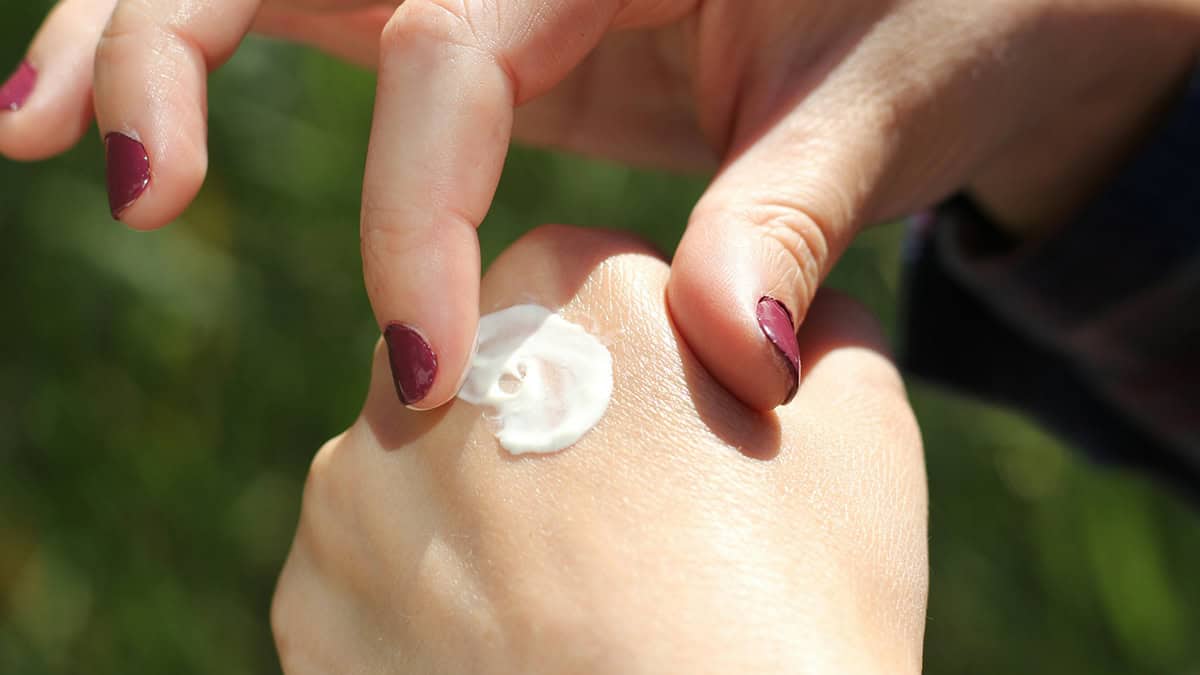
Vtama is a topical cream that you apply locally, in just one place, directly to your skin.
On both counts, that’s not what you do with biologics.
Vtama is not a biologic.
Can Vtama Be Used on the Face?
Your face’s skin is a little different than the skin on the rest of your body.
It’s more sensitive … and it’s also more visible. You’re probably already a bit more discerning regarding what you put on your face versus what you put on your legs in terms of topical creams and ointments.
So. Can Vtama be used on the face?
The answer, of course, depends on your specific situation … and, most importantly, your healthcare provider’s guidance.
Facial skin is thinner and more sensitive than other areas of the body, which means it can react more easily to topical psoriasis medications. While Vtama is not a steroid (which can be a concern on delicate areas like the face), it can still cause mild irritation in some users.
For that reason:
- You should only use Vtama on the face if your healthcare provider specifically recommends it
- Application should be thin and targeted, avoiding sensitive areas like the eyes, lips, and inside the nose
- Monitoring for irritation is especially important when treating facial skin
If psoriasis affects the face, your provider may adjust how often you apply the medication or recommend combining it with other treatments.
The key is individualized guidance rather than a one-size-fits-all approach.
How Long Does Vtama Take to Work?
Vtama can take a bit to work, so setting your expectations upfront can make a big difference in the experience you have.
Vtama does not deliver instant results.
Like most psoriasis treatments, it works gradually over time.
Many patients begin to notice improvements in:
- Redness
- Scaling
- Overall texture of plaques
… within several weeks of consistent use.
For some, continued application may lead to clearer skin over a longer period, depending on how their psoriasis responds.
A couple important points to keep in mind:
- Consistency matters. Using Vtama as prescribed gives it the best chance to work; failing to take your medication consistently (or not performing adequate “medication adherence”) will probably yield poor results.
- Change may not be dramatic. Early changes may be subtle before becoming more noticeable. Taking progress pictures or notes can help you see the changes with a bit more clarity, which can further help with medication adherence over the long term.
Vtama Psoriasis Treatment: Where It Fits in Care
It’s often helpful for patients to contextualize this new part of their treatment.
Where does Vtama for psoriasis fit into other treatment options?
Let’s review:
Vtama is typically considered:
- A topical treatment option for plaque psoriasis
- An alternative when steroid use is limited or not preferred
- A potential part of longer-term management strategies
It may be used:
- On its own for milder cases
- Alongside other treatments for more persistent psoriasis
So, for you this means that if you and your doctor have decided that you need an alternative to steroids that works well for the long-term treatment for your mild psoriasis, Vtama may be worth checking out.
And, if you have a more severe case of psoriasis to manage, your doctor may decide to pair Vtama with another psoriasis medication to give you the relief you deserve.
Remember: Psoriasis is a chronic condition.
Treatment plans tend to evolve over time.
If something works well for you initially, great!
That thing that works for you may perform differently over time, and you may need to work with your doctor to evolve your treatment plan. This isn’t a bad thing, just something to partner with your doctor with (and something to know is likely coming!).
How to Use Vtama Cream Correctly
Just got Vtama Cream?
Wondering how to get the absolute most out of it?
We’ve got you covered. Using Vtama is relatively simple, but doing so correctly can make a big difference in the way it works and how you feel while using it.
Here’s what we’d recommend:
- Apply a thin layer once daily, or as directed
- Use only on affected areas of skin
- Avoid applying more than recommended
- Wash your hands after applying the cream
Also, know this: Applying more Vtama than you need won’t help you see results any faster, and may actually make it more likely that you’ll experience irritation.
Employing a more consistent approach (with thin layers!) will be the best experience for you.
Vtama Cream Where to Buy: What to Know

Vtama Cream can work very well for people with plaque psoriasis …
… that is, of course, if they can find and afford it.
First things first: Vtama is a prescription medication.
That means you’ll need a valid prescription from a licensed healthcare provider.
This shouldn’t be a barrier to treatment. It’s for your safety. But it is a consideration; if you’re interested in using Vtama, you’ll need to make an appointment and discuss your health concerns and goals with a professional.
Then, once you have a valid and updated prescription, you need to locate and buy your Vtama Cream.
Unfortunately, Vtama Cream can be wildly expensive.
In the United States, a 60g tube of Vtama Cream can cost as much as $1,500.00-$2,000.00. For a medication you’ll need to take chronically and consistently, that’s a steep cost.
The specific availability and cost you see will vary – and possibly vary widely – depending on insurance coverage, location, and pharmacy pricing.
We have one last piece of good news to share.
Here, through NorthWestPharmacy.com, you can buy that same 60g tube of brand Vtama Cream for about $700.00 – savings of around 50% when compared to typical USA drug prices.
Once you have your Vtama Cream prescription, head to our Vtama Cream page to learn more about your medication.
Got any questions? Talk to our knowledgeable pharmacists to make sure you thoroughly understand your treatment. Our entire team is looking forward to supporting you and your psoriasis treatment journey.


