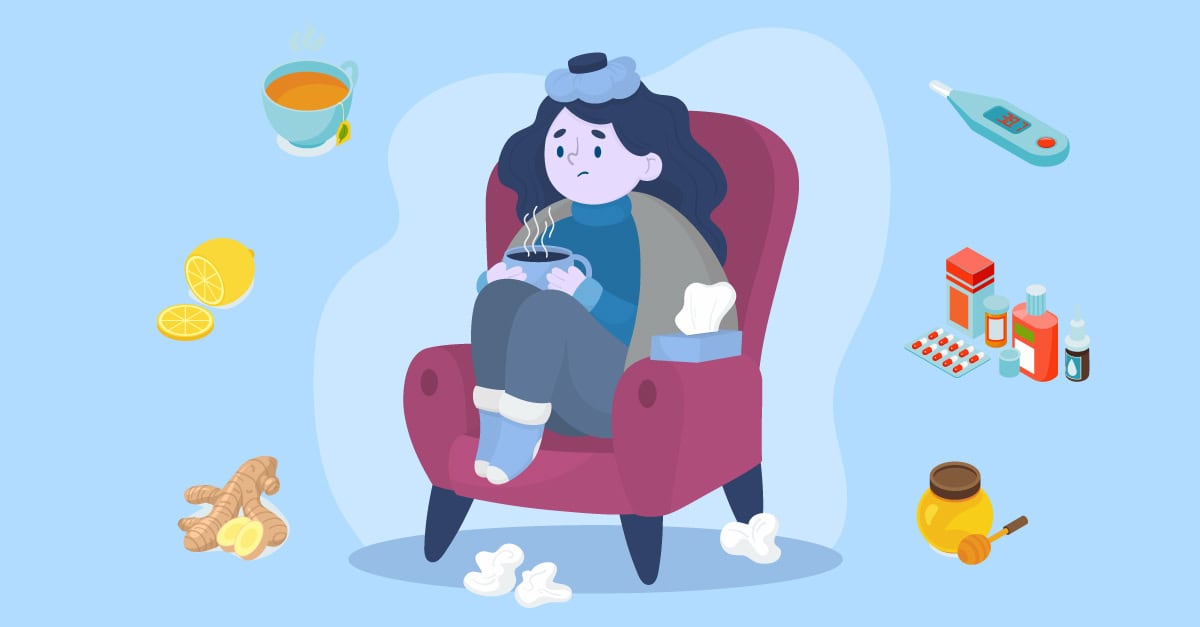
Lots of people get a cold or flu, especially during the colder months when we spend more time indoors. A “cold” is what doctors refer to as a “viral upper respiratory tract infection (URI)”, while “the flu” is a special type of URI caused by the influenza virus.
Colds and flus are a routine part of life. However, the duration of the illness doesn’t seem so routine. Often, it’s impossible to predict how long it will be before we feel well again. Is there anything we can do to get back on our feet faster? In this article, we’ll answer that question by looking at various ways to treat these illnesses.
Antiviral Medications
The only viral URIs that we have antiviral medications for are COVID-19 and the flu. There are two classes of antivirals that are effective for the flu:
- Neuraminidase inhibitors (NAIs): Such as oseltamivir and zanamivir
- Endonuclease inhibitor: Baloxavir marboxil is the only one approved for use
Antivirals for flu must be started within 1 to 2 days of getting sick to be effective. If started early, they’ve been shown to reduce the severity of symptoms and shorten the duration of illness by about 1 day.
Antivirals for COVID-19 infection must also be started within 1 to 2 days of getting sick to be effective. Generally, these medications are reserved for use in people who are at high risk of severe illness, such as elderly persons or those with significant health problems.
As well, other ant-flu and anti-COVID-19 drugs are under development. Antivirals for other viral URIs have been under development for decades, but a successful treatment has yet to emerge.
Vaccination
Vaccination is the best way to prevent getting sick if you are exposed to the viruses that cause illness, or to reduce symptom severity and duration of illness if you do get sick. Unfortunately, the only viral URIs for which there are currently vaccinations are COVID-19 and the flu. There are effective flu vaccines available on an annual basis, but you must get the shot every year.
Echinacea
You may have heard of the use of “echinacea” for treating colds and flu. Echinacea is a dietary supplement derived from the plant Echinacea purpurea, thought to have immune-stimulating and antiviral properties. But…does it work?
A Cochrane Review (the Gold Standard for unbiased medical information) found that echinacea had no identifiable benefits for treating URIs in children or adults, although some products may have a weak benefit.
However, more recent studies have been challenging that conclusion, particularly when very high doses of echinacea are used (for example, 2,000 mg per day). At this point, there is insufficient information to be able to recommend for or against this remedy.
The use of echinacea for treating the flu hasn’t been well studied. However, a well-designed study that looked at a particular echinacea preparation found that it had effects comparable to the antiviral drug oseltamivir in reducing the severity and duration of the flu.
Overall, it can be said that the use of echinacea for recovering from a cold is questionable. It may be of benefit in recovering from the flu, but there isn’t enough research evidence to say for sure.
Symptomatic Treatment
There are lots of cold and flu remedies that help with symptoms, but they won’t shorten the illness. Let’s look at some of those now, based on the symptoms they are meant to ease:
- Sore throat: Saltwater gargle, sore throat sprays, ice chips, lozenges, or hard candies. These are meant to ease symptoms for a while and won’t help you get better faster. Small children may not be able to gargle and may not be able to safely use lozenges or hard candies.
- Stuffy nose: Saline nasal sprays, saline drops followed by nasal syringing for small children, over-the-counter (OTC) nasal decongestants. A cool-mist humidifier may help. These measures may relieve symptoms but won’t speed recovery.
- Cough syrups: In general, these haven’t proven to be any more effective than placebo, although some may have a modest benefit. Cough syrups may be harmful for small children.
- Pain and fever: OTC pain/fever medications such as acetaminophen and/or ibuprofen may provide significant relief.
As well, general measures may help us feel better during a bout of cold or flu, such as:
- Fluids: Preventing dehydration is important, as inadequate fluid intake can make people feel even more unwell. Good fluid intake also helps loosen congestion. Consider juice, water, warm lemon water with honey, or broths. Avoid alcohol and caffeine, as they dehydrate.
- Rest: Our immune system works better when we’re at rest.
Vitamin C, zinc: There’s some evidence that these nutrients may shorten the duration of a cold or flu.
Bottom Line
For some people with influenza or a viral URI caused by COVID-19, there are antiviral medications available that have been shown to reduce the severity of symptoms and duration of illness. There’s some evidence that echinacea, vitamin C, or zinc may shorten the duration of colds and flu, but this is far from certain. Symptomatic treatment doesn’t help us get over being sick faster, but it may help relieve symptoms. Symptomatic treatment and self-care are our best path to getting back on our feet.
