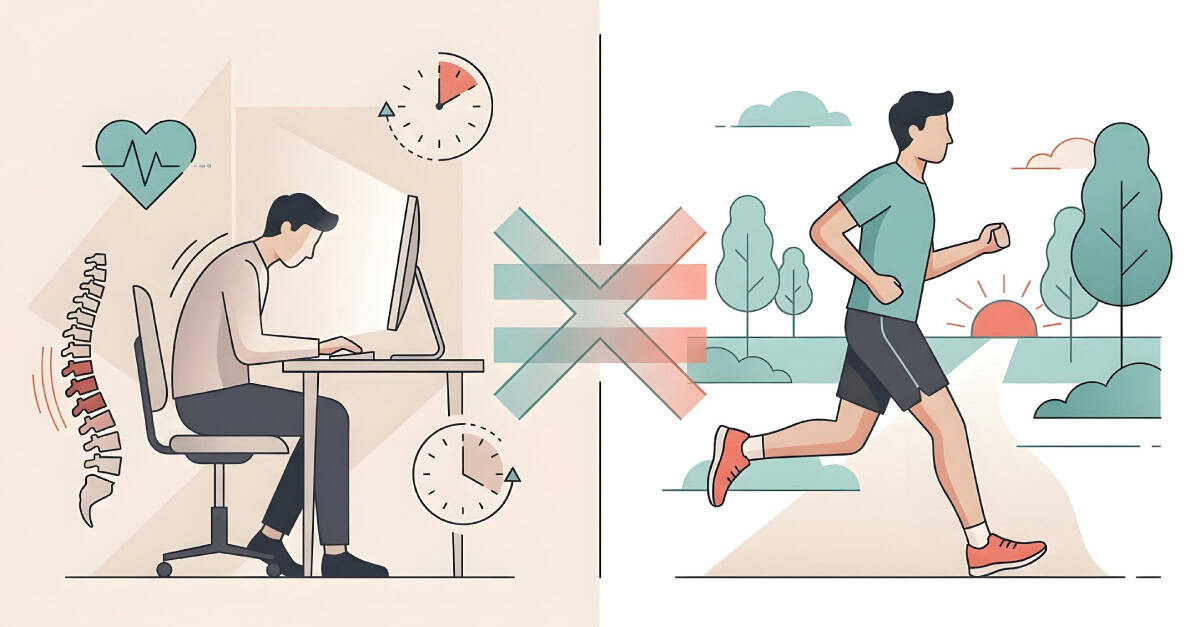
If you’ve ever felt reassured after a good workout—thinking it cancels out a long day at your desk—you’re not alone. Many people believe that a good run or workout at the gym is enough to counterbalance hours of sitting. Unfortunately, research tells us that it’s not so simple.
Advances in technology have made everyday life more convenient, but they’ve also reshaped our habits—shifting many people from active routines to increasingly desk-bound lifestyles. The impact on health has been so drastic that some researchers and organizations have even gone so far as to suggest that the increase in sedentary lifestyle is the leading cause of all major non-communicable health problems worldwide.
Importantly, even people who exercise regularly may still be at risk of sitting disease. In this article, we’ll discuss why this is and how to protect yourself and your health.
What Is “Sitting Disease?”
“Sitting disease,” also referred to as “sedentarism,” occurs when our risks for a number of health conditions increase with excessive sitting daily for a prolonged period.
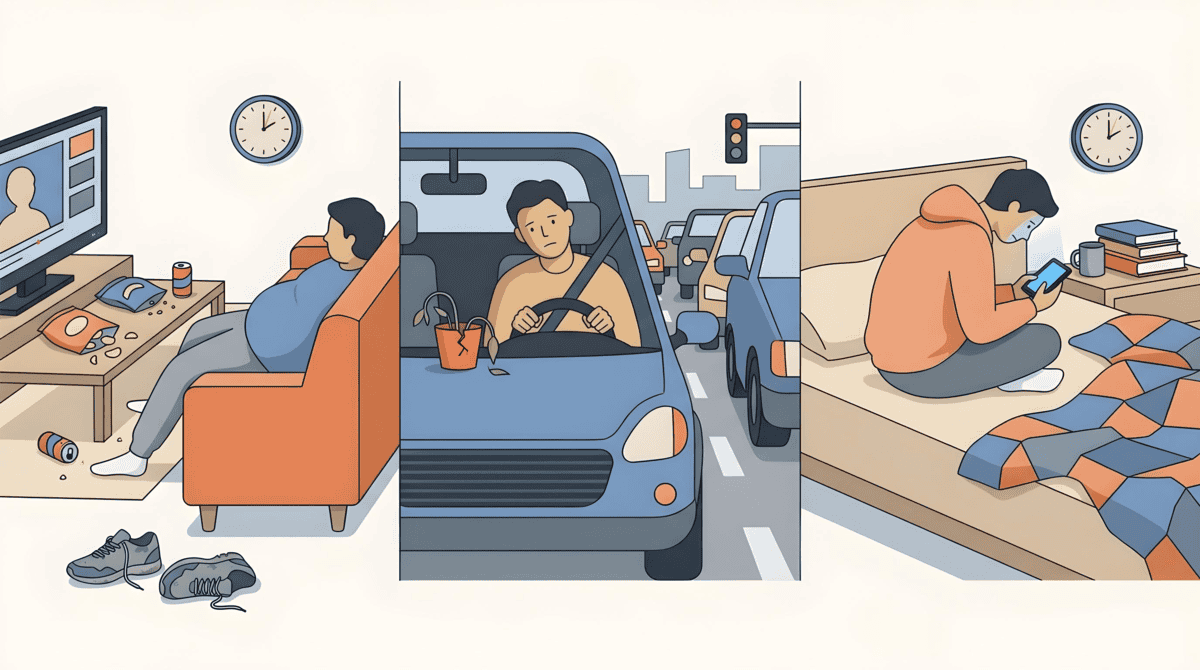
Sitting disease arises when a person spends more than 7 or 8 hours a day seated, usually because they’re involved in “chair-type” activities (such as a sitting job, commuting, or studying) or “screentype” activities (watching TV, using a computer, or scrolling on a mobile phone). We know that sitting disease is time-dependent—the more time spent sedentary every day, the higher the risk.
Although sitting disease isn’t a formal medical diagnosis, it has become a widely recognized risk factor for adverse health conditions and a focus of public health campaigns.
What Are the Risks of Sitting Disease?
Sitting for long stretches slows down your metabolism, and muscles become largely inactive. This leads to reduced calorie burning, decreased insulin sensitivity, and poor circulation. Over time, these changes can contribute to increased risks of the following:
- Cardiovascular disease
- Type 2 diabetes
- Obesity
- High blood pressure
- Poor cholesterol profile
- Certain cancers (such as colon and breast cancers)
- Osteoporosis
- Chronic knee pain
- Depression
- Premature death
What may surprise some people is that these risks aren’t limited to those who’re completely inactive. Even people who exercise every day can be affected.
Why Exercise Isn’t Enough
You might think: “I go to the gym every day—surely that protects me.” Exercise is incredibly important, but an hour of exercise doesn’t undo 8 hours of sitting. The human body responds not just to how much you move, but how often you move. Even the WHO guidelines for the minimum amount of physical activity for maintaining good health (at least 150 minutes of moderate-intensity physical activity per week for most adults) are insufficient to counteract the effects of sitting disease.
Research shows that prolonged uninterrupted sitting has its own independent effects on health, separate from lack of exercise. Even in individuals who exercise daily, extended sitting time is associated with higher risks of metabolic disease and mortality. This has resulted in doctors coining the term “active couch potato,” which describes someone who exercises regularly but is otherwise sedentary for most of the day. Despite their workout, if their overall daily movement is still low, their body experiences long stretches of metabolic inactivity that negate some of the benefits of exercise.
How To Protect Yourself
Many of us have no choice but to spend long periods of time in a sedentary position because of work, study, or a commute, for example. However, there’s much we can do to reduce our risks of adverse health effects.
The good news is that small changes matter. The goal isn’t just to exercise more, but also to sit less and move more often. Here are some simple ways to accomplish that:
- Break up sitting time. Stand up or move every 30–60 minutes. Even 1–2 minutes of light activity helps. For example, you might stand while taking a phone call, or walk to get water instead of keeping it at your desk.
- Use “movement snacks.” These are short bursts of activity throughout the day, such as a quick lap around the office, climbing a flight of stairs, or light bodyweight exercises.
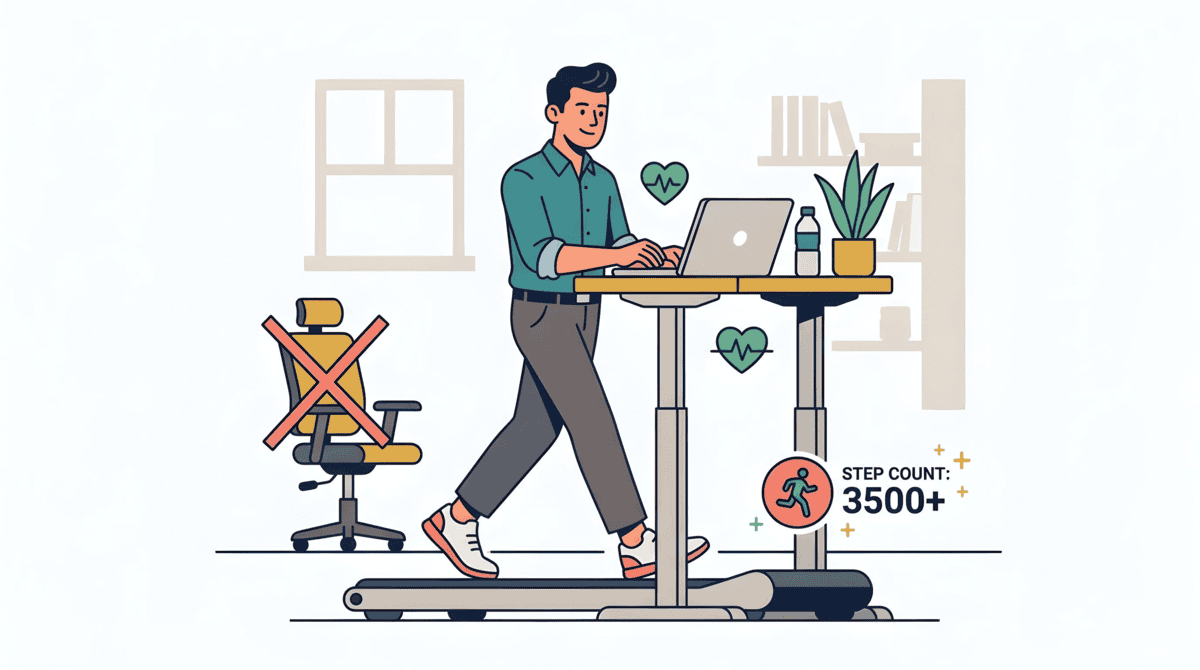
- Alter your work setup. For example, use a sit-stand desk and alternate between sitting and standing, or position your workspace to encourage movement.
- Walk whenever you can. Walking is one of the most underrated forms of exercise. Try to walk after meals, park farther away, or take short workday walking breaks.
- Shift your mindset. Keep exercising, but don’t rely on it alone. Exercise should be seen as only one part of an overall plan to keep moving and stay in good health. Think of movement as something your body needs consistently, like hydration or nutrition.
Take-Home Message
Modern life makes sitting unavoidable for many of us. Desk jobs, long commutes, and screen-based leisure are part of our daily reality. But that doesn’t mean we have to suffer the negative effects of sitting disease. By breaking up long periods of sitting and incorporating more movement into your day, you can significantly reduce your health risks. Your body was never designed to sit still for hours at a time—and it will thank you when you don’t.
References:
Journal of the American Medical Association
Harvard Health website
US National Library of Medicine website
World Health Organization website
