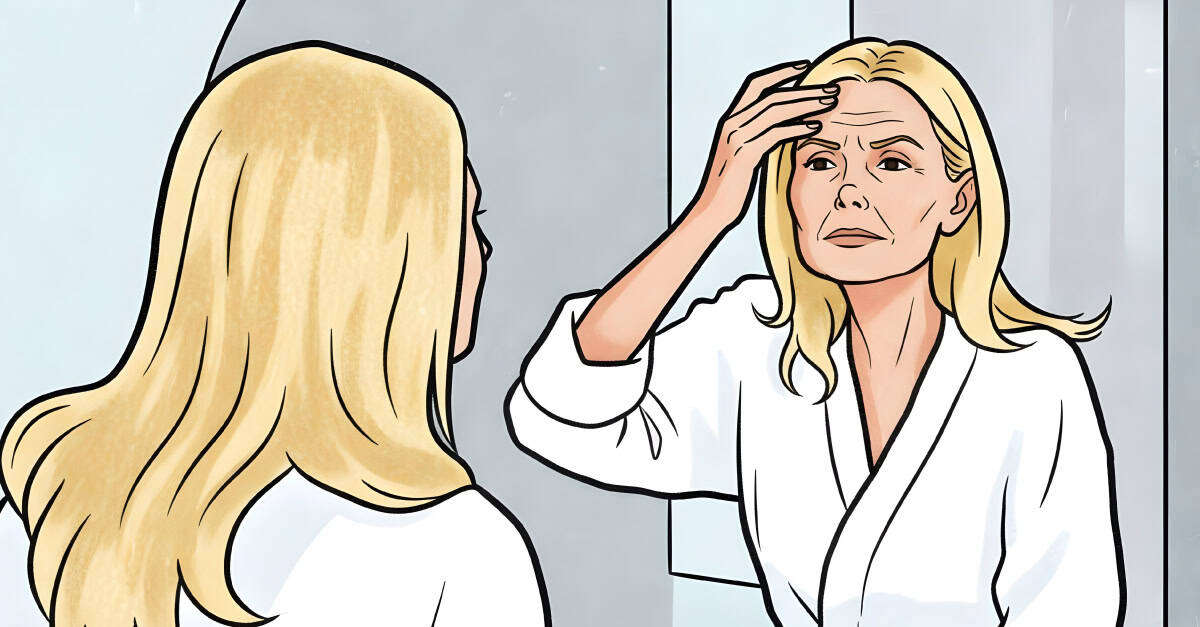
Time, relentless as it is, doesn’t pass us by untouched. Lines and wrinkles, the scourge of aging, are a record of our past; life, love, sleepless nights, worries, laughter, and days in the sun all leave their mark. Lines and, later, wrinkles etch themselves over once-smooth skin, as if to rob us of the vanity of our passing youth.
Sadly, the fine lines and wrinkles that map out our lived experiences are often regarded as unsightly, rather than marks of wisdom, experience, and dignity. This is exactly why the restorative skin industry is projected to reach $150 billion USD by 2030, with annual growth of nearly 7%. People want their youthful skin back.
There are a number of ways to improve your skin’s elasticity, firmness, and suppleness…or at least its youthful appearance. Topical creams and peels, plastic surgery, and laser treatments, for example. There are many ineffective and even deceptive products and procedures on the market, but some have been validated by clinical research. Laser treatments are among them.
How Laser Treatments Fight Wrinkles
The aging changes of skin are well known: sagging, discoloration, and lines and wrinkles. These occur for a number of reasons:
- Loss of collagen and elastin. As we age, our skin loses much of its supportive scaffolding, which is provided by collagen and elastin. These proteins give skin its elasticity and suppleness.
- Slower skin turnover. With the passage of time, our skin cells renew much less efficiently, so our skin becomes thinner.
- Loss of moisture. As the decades pass, our skin progressively loses its ability to retain moisture.
- Dynamic wrinkles. These are lines that form from repetitive facial expressions like smiling or frowning.
- Sun exposure. Unprotected ultraviolet (UV) light exposure is the most significant factor in skin aging.
- Toxins. Like UV light, tobacco smoke and environmental pollutants damage collagen and elastin and discolor the skin.
- Genetics. Inherited traits play a role in how well your skin ages.
- Gravity. The constant tug of gravity creates sagging as our skin loses its elasticity.
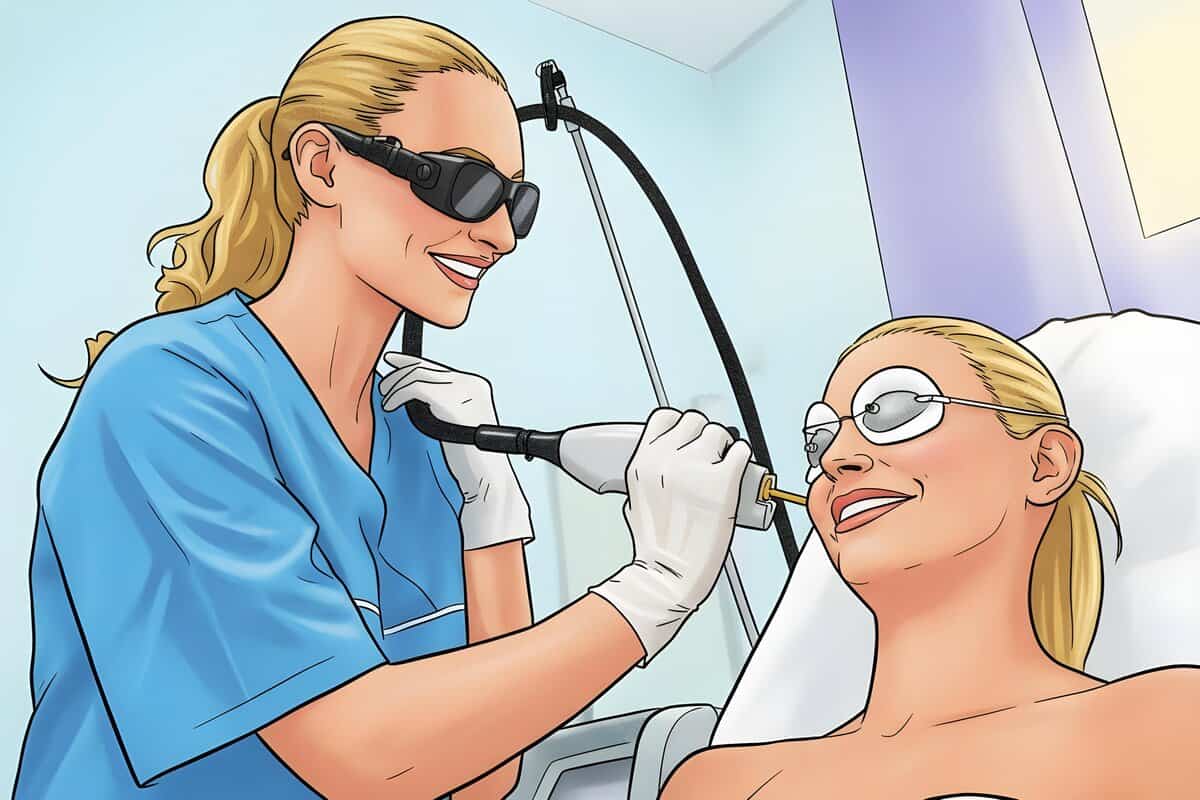
Laser treatments fight wrinkles by removing outer layers of skin and debris, which makes room and stimulates fresh skin growth. This is known as “ablative” laser therapy. They also work by creating “micro-injuries” deeper in the skin that stimulate collagen and elastin production; these are known as “fractional” treatments.
Types of Laser Skin Treatments
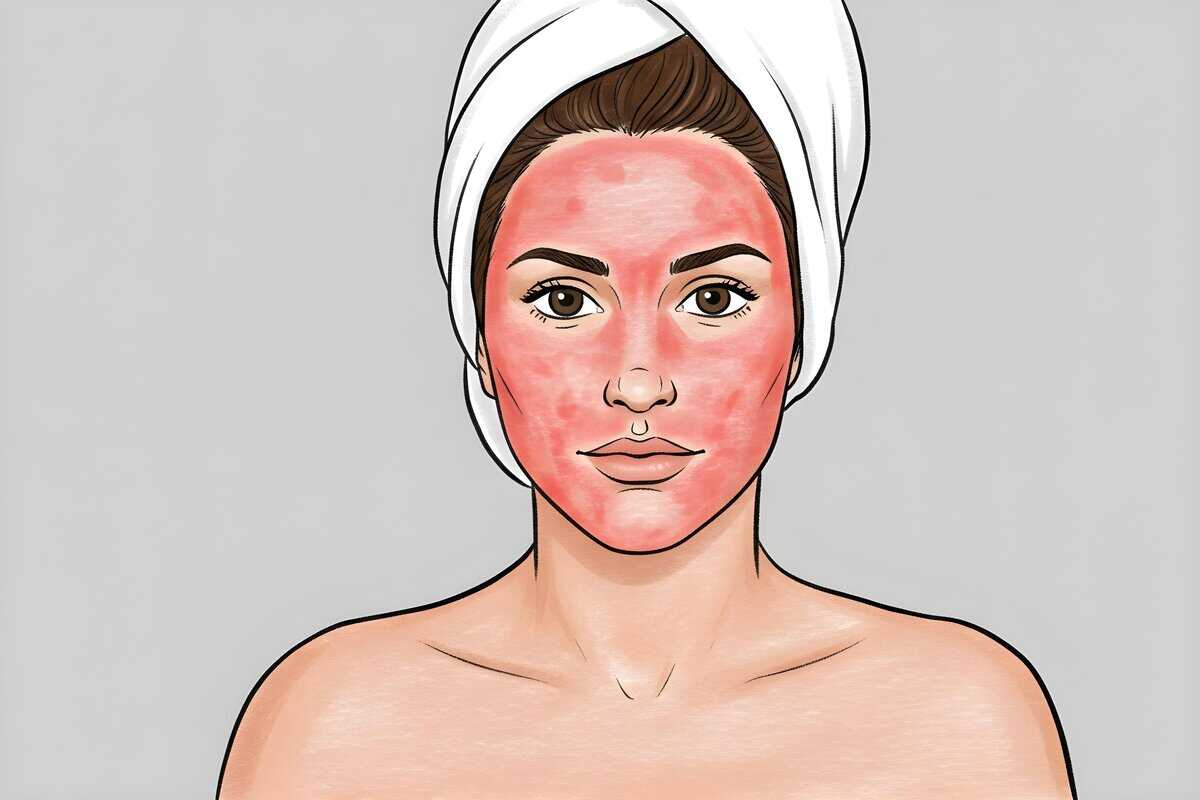
Various types of lasers and treatments are available, and choosing the right one may depend on your desired results and how much downtime you can tolerate afterward. After treatment, you will experience redness, skin warmth, and some swelling, similar to a sunburn. As with a sunburn, your skin may peel, especially after an ablative treatment. Let’s look at the different types of lasers.
Ablative Lasers
These are ideal for deep wrinkles and sun damage but require a longer recovery time. Initial healing time is 10 to 14 days, although redness and swelling may persist.
Non-ablative Lasers
These heat the deeper layers of skin without damaging the surface, thereby stimulating collagen and elastin production. Downtime is usually minimal, but multiple treatments may be required to achieve optimal results.
Hybrid Lasers
These combine ablative and non-ablative technologies to achieve significant results with less downtime. Hybrid treatments are useful for skin texture, coloration, and tone.
Fractional Lasers
These may be ablative or non-ablative. Recovery time is usually around 3 to 7 days, although there may be pinkness that takes longer to resolve. Faster recovery, but less dramatic results. Collagen rebuilding may continue for months after the treatment, so maximum results won’t be immediately evident.
Intense Pulsed Light (IPL)
These are technically not lasers, but they’re often referred to as such. Rather, they involve applying light energy to the skin at less intensity than laser light. IPL treatments have many uses, depending on the wavelength of light used. These include:
- Removing sunspots, melasma (pigmented patches), and other discoloration
- Acne reduction
- Control of rosacea, a disorder of facial skin blood vessels that cause spider veins, redness, and acne-like eruptions
- Removal of unwanted hair
- Fine lines. IPL may be used for improving superficial fine lines and wrinkles.
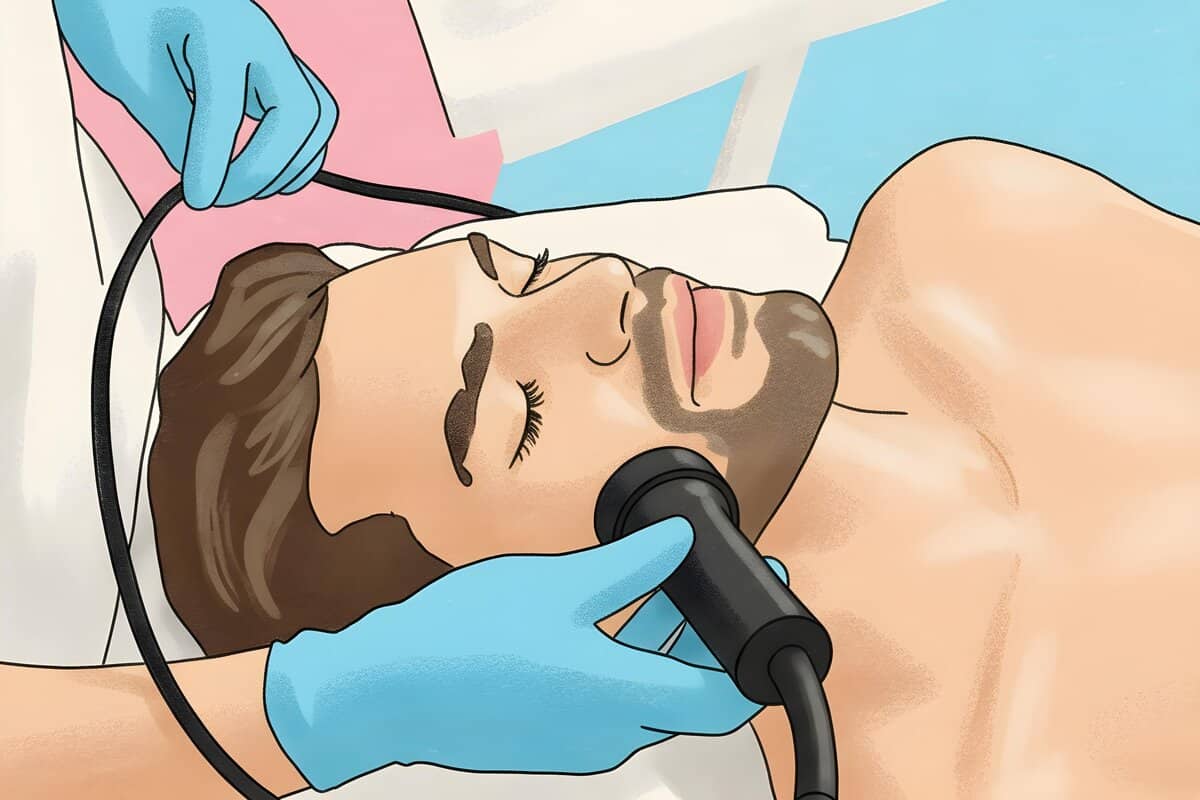
IPL deep-heats the skin, so some skin pinkness and sensitivity may last for a few days after a session. They are much less intense than laser treatments, but also produce less dramatic results. Because of this, IPL treatments usually involve multiple sessions.
Bottom Line
Laser skin rejuvenation will almost certainly produce positive results. However, the treatments may be costly, sometimes require repeat sessions, and may require significant recovery time. The results may not be fully evident until weeks or months after treatment. Laser treatments will not produce the same dramatic results as plastic surgery, but, especially when combined with injectable fillers, may produce compelling improvements in facial lines and wrinkles, as well as skin tone and texture.
