
Attention-deficit/hyperactivity disorder (ADHD) is a condition that affects how the brain regulates attention, activity, and impulses. People with ADHD may have difficulty concentrating, staying organized, completing tasks, remembering responsibilities, or controlling impulsive behaviors. Some also experience restlessness or hyperactivity. Symptoms and their severity vary considerably from person to person.
ADHD usually begins during childhood, but symptoms often continue into adulthood and may affect work, education, relationships, and daily life. Many adults reach their 30s, 40s, or even later without realizing that ADHD may help explain difficulties they have experienced for much of their lives.
According to the Centers for Disease Control and Prevention (CDC), about 15.1 million adults (6% of adults) in the United States (US) currently have ADHD. More than half of those were diagnosed in adulthood, and about one-third are not receiving any kind of treatment.
What Does ADHD Look Like in Adults?
While everyone has some degree of difficulty focusing or may feel restless at times, ADHD involves persistent problems with inattention, hyperactivity, and/or impulsivity that interfere with everyday functioning. However, these symptoms can look quite different in adulthood than they do during childhood.
For example, an adult with ADHD may repeatedly miss appointments, procrastinate on important projects, forget to pay bills, lose keys or phones, or struggle to organize household responsibilities. They may have difficulty concentrating during meetings or conversations yet become intensely absorbed (“hyperfocused”) on activities they find interesting.
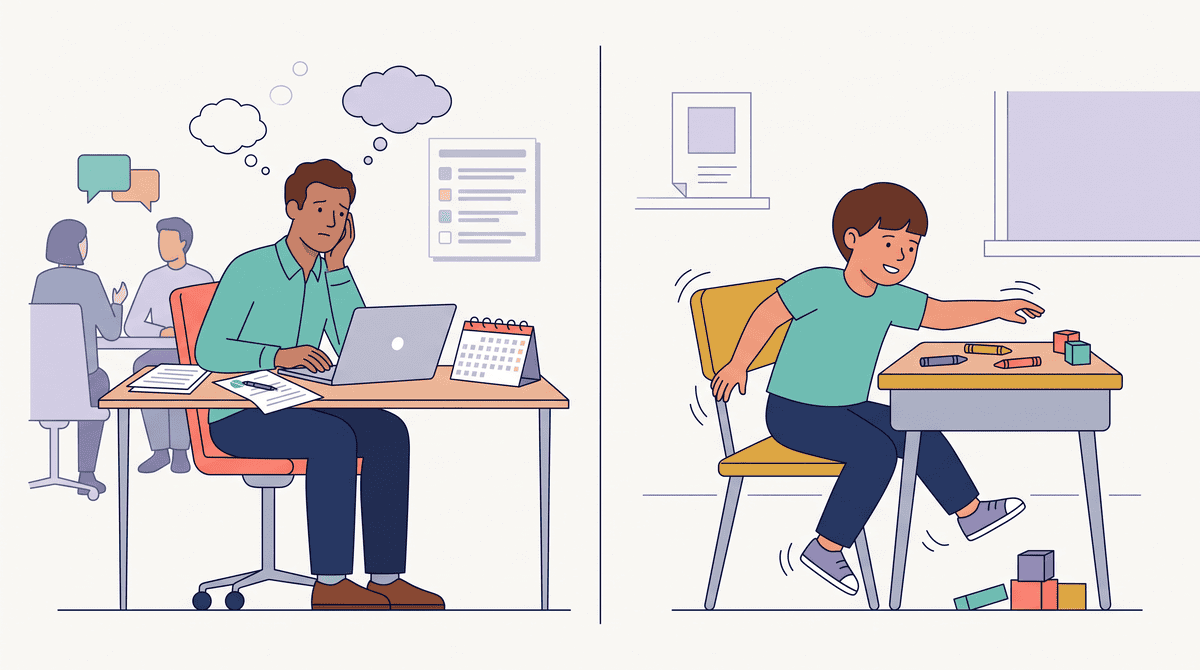
These difficulties can affect virtually every part of life, including education, employment, finances, relationships, parenting, and self-esteem. Adults with ADHD may have trouble with keeping healthy habits, such as following a regular sleep schedule, planning nutritious meals, or remembering medications. Impulsivity may contribute to risk-taking behaviors, such as unsafe driving or substance use.
Why Is ADHD Often Diagnosed Late?
One major reason that ADHD is often diagnosed late is that our understanding of ADHD has changed substantially. Historically, ADHD was viewed as a childhood condition characterized by obvious hyperactivity. Adults whose main difficulties involved attention, organization, or executive functioning (i.e. planning, decision-making, and impulse control) could therefore go unnoticed.
Some children and adolescents develop effective coping strategies or have supports in place that reduce or hide ADHD symptoms, such as a structured home environment, strong academic ability, supportive parents, or personal effort. However, those strategies can become less effective as life becomes more complicated. University, career, marriage, parenting, financial responsibilities, or managing a household can dramatically increase the number of tasks a person must organize.

Women May Be Diagnosed Later
ADHD has historically been diagnosed more frequently in boys during childhood. One reason may be that girls are more likely to have symptoms that are less disruptive and therefore easier to overlook.
A girl who daydreams, forgets assignments, struggles quietly with organization, or spends enormous amounts of time compensating for attention problems may attract less attention than a classmate displaying obvious hyperactivity or disruptive impulsivity.
Some women also describe masking or compensating for their difficulties, sometimes at substantial emotional cost. A systematic review examining women diagnosed with ADHD as adults found that living with previously undiagnosed ADHD could affect emotional well-being, relationships, feelings of control, and self-esteem.
For some women, receiving a diagnosis later in life provides a new explanation for struggles they had previously attributed to laziness, poor discipline, or personal failure.
ADHD Can Be Mistaken for Other Conditions
Another challenge is that ADHD symptoms overlap with several other conditions. Difficulty concentrating, for example, can occur with anxiety, depression, sleep disorders, substance use, and other psychiatric or medical conditions. ADHD may also occur alongside other mental health disorders, further complicating diagnosis.
This is one reason an online ADHD questionnaire cannot establish a diagnosis by itself. Clinical guidelines recommend a comprehensive assessment that examines symptoms across different settings, developmental and psychiatric history, functional impairment, physical health, and possible coexisting conditions.
When Should You Consider an ADHD Assessment?
Occasionally forgetting an appointment or procrastinating does not mean you have ADHD. Everyone experiences attention and organizational problems sometimes. An evaluation may be worth considering when a long-standing pattern of difficulties consistently interferes with everyday life. Examples include:
- Chronic problems organizing or completing tasks
- Frequently losing important items
- Missing deadlines or appointments despite repeated efforts to remember
- Difficulty maintaining attention during conversations or routine work
- Persistent procrastination and problems starting tasks
- Impulsive decisions or frequent interruptions
- Restlessness or a constant need for stimulation
- Difficulties affecting work, education, finances, or relationships
A Late Diagnosis Can Still Make a Difference
Learning that you have ADHD at age 30, 45, or 60 does not change the difficulties you experienced earlier in life, but it can change how you understand and manage them.
Treatment is individualized and may include ADHD-focused psychological interventions such as cognitive behavioral therapy, environmental modifications, organizational strategies, education about the condition, and/or medications.

Clinical guidelines recommend medication for adults whose ADHD continues to cause significant impairment after appropriate environmental modifications, while psychological interventions may be used alone or together with medication depending on individual circumstances.
Perhaps most importantly, an accurate diagnosis can replace years of confusion with an explanation, and it can provide a starting point for strategies specifically designed for managing attention, motivation, organization, and impulse control in individuals with ADHD.
References:
Journal of Global Health medical journal
National Institute for Health and Care Excellence ADHD guidelines
Journal of Attention Disorders medical journal
Centers for Disease Control and Prevention website
