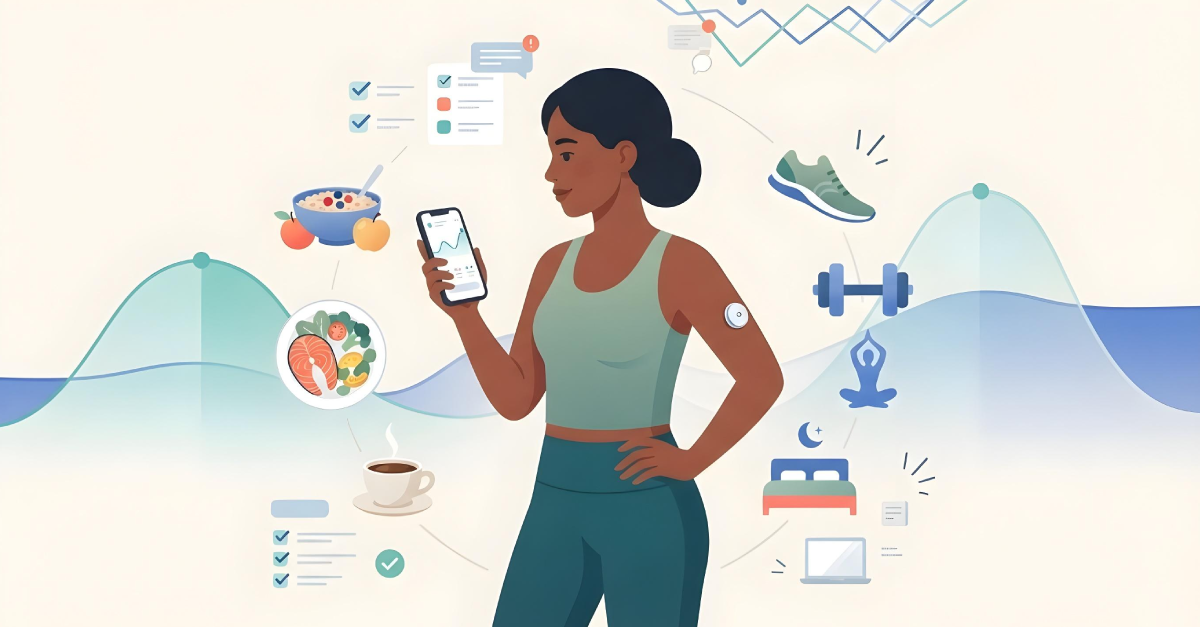
Continuous glucose monitors (CGMs) have transformed diabetes care by allowing people to check their blood sugar (glucose) levels throughout the day without repeatedly pricking their fingers. More recently, CGMs have moved beyond diabetes care and into the wellness and “biohacking” world. Companies increasingly market CGMs to people without diabetes who want to optimize their diet, exercise, energy levels, or metabolic health.
The idea is appealing: if you can see exactly how your body responds to a bowl of oatmeal, a stressful meeting, or a workout, perhaps you can use that information to make healthier choices. But does tracking every glucose rise and fall really improve health in people without diabetes?
What Is a Continuous Glucose Monitor?
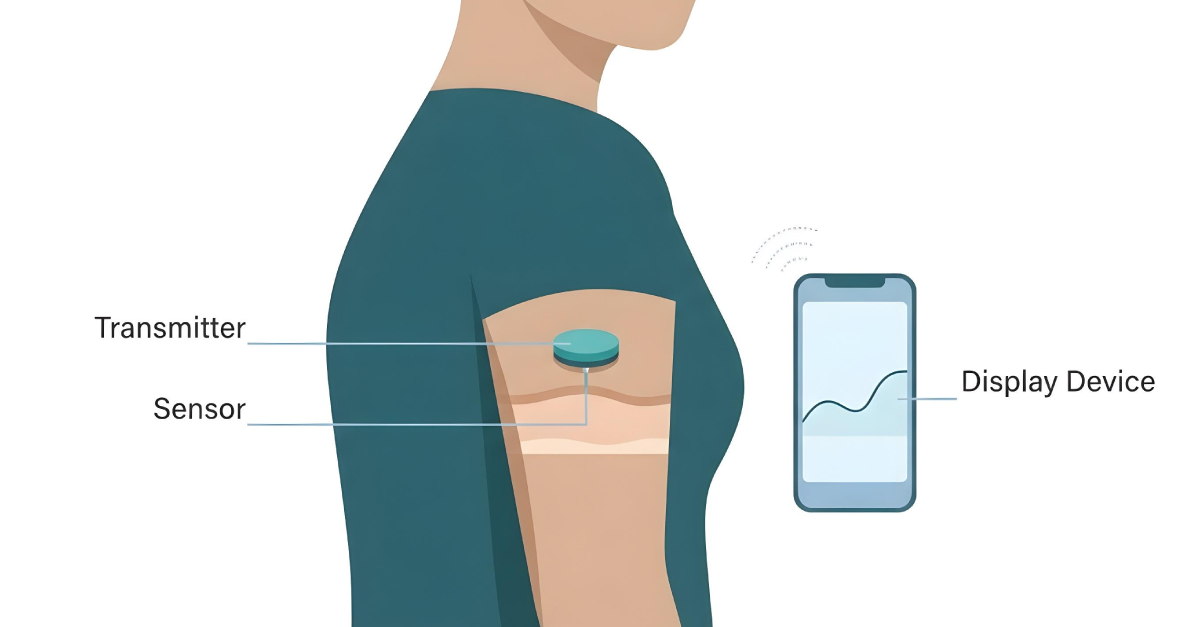
A CGM is a small wearable device that measures glucose concentrations in the interstitial fluid—the fluid surrounding cells beneath the skin. A tiny flexible filament sensor is inserted just beneath the skin (usually on the arm or abdomen) using an applicator. A small transmitter is attached to the sensor and sits on top of the skin. Then a purpose-built display or smartphone displays the data.
The sensor takes readings every 1 to 5 minutes, and the readings are transmitted to the display device. Users can see not only their current glucose level but also trends in their levels.
For people with diabetes, this information can be extremely valuable. CGMs can identify potentially dangerous episodes of high or low glucose, help guide medication and insulin treatment, and show how meals, physical activity, illness, and other factors affect glucose control. Their usefulness in healthy people is less certain.
What Can a CGM Tell Someone Without Diabetes?
Research involving thousands of people without diabetes has demonstrated measurable differences in glucose patterns and variability between individuals. Meals containing large amounts of rapidly digested carbohydrates generally cause glucose to rise, but two people eating similar meals may experience different responses. Exercise, sleep, meal timing, body composition, stress, and individual metabolic differences may all influence glucose patterns.
A CGM can therefore act as a form of real-time biological feedback. Someone might discover, for example, that eating carbohydrate together with protein and fiber produces a different glucose pattern than eating the carbohydrate alone. They may also observe how walking after a meal, exercising, sleeping poorly, or eating late at night affects their glucose. This immediate feedback could encourage healthier behaviors. This is the basis of “biohacking,” which is the practice of making changes to your lifestyle, diet, or biology to improve your physical performance, mental focus, and overall health.
Could a CGM Improve Your Diet?
Personalized nutrition is one of the strongest arguments for using a CGM for wellness in someone without diabetes. Instead of simply being told to “eat healthier,” users receive immediate information about how their bodies respond to particular foods. Some research suggests that combining information about glucose responses with other personal characteristics may help individualize dietary advice.
Research into using the device as a biohack remains limited. Obtaining benefits may involve much more than simply wearing a CGM, making it difficult to determine how much benefit comes from glucose monitoring itself. Seeing your glucose data might motivate healthier choices—but simply wearing a sensor does not automatically make you healthier.
The Potential Downsides of Tracking Glucose
More information is not always better information, and this includes the information provided by CGMs. CGMs measure glucose in interstitial fluid rather than directly in the bloodstream, and readings can differ from blood glucose values. Sensor errors and time delays can also occur. A seemingly abnormal reading may therefore cause unnecessary concern.
There is also a risk of overinterpreting normal physiology. Someone might stop eating nutritious foods such as fruit, beans, or whole grains simply because they notice a temporary glucose increase.

Constant monitoring could also potentially increase anxiety or encourage overly restrictive eating in susceptible individuals. A 2024 review of CGM use among people without diabetes highlighted the lack of standardized thresholds for interpreting CGM data in this population and raised concerns about possible adverse effects on eating behavior.
Finally, CGMs cost money. For people without diabetes, that expense may produce little measurable health benefit compared with established interventions such as regular exercise, maintaining a healthy weight, a healthful diet, avoiding tobacco, proper sleep, and controlling blood pressure and cholesterol.
Bottom Line
CGMs could eventually contribute to personalized nutrition and prevention of metabolic disease in people without diabetes. They may also be useful research tools for understanding how diet, exercise, sleep, and other behaviors affect metabolism. However, there is currently insufficient research evidence showing that routinely wearing a CGM improves long-term health outcomes in people without diabetes. For now, CGMs for healthy people are best regarded as an intriguing wellness technology—not a proven shortcut to better metabolic health.
References
Diabetic Medicine medical journal
PLoS One medical journal
Cell Metabolism medical journal
Metabolism medical journal
Clinical Nutrition medical journal
