
Do You Get Enough Veggies?
Veggies are a dietary item where most of us could do much better. The United States Department of Agriculture (USDA) recommends how many servings of veggies we should have per day to support good health and function. They recommend the amounts by cup, where 1 cup is:
- 1 cup of veggies (may be raw, cooked, or canned)
- 2 cups of salad greens
- 1 cup of 100% veggie juice
Their recommendations vary by age and gender. For example, an adult female aged 31 to 59 years should have 2 to 3 cups per day, while a male in the same age group should have 3 to 4. These are not random recommendations; they’re grounded in decades of substantial evidence showing the clear association between adequate nutrient intake and health.
According to the Centers for Disease Control and Prevention (CDC), only 10.0% of American adults meet the USDA veggie intake recommendations, ranging from 5.6% in Kentucky to 16.0% in Vermont. We can definitely do better.
How does your eating measure up? Take the USDA quiz!
Why Are Veggies So Important?
The CDC points out that there is considerable research evidence showing that adequate veggie intake supports healthy immune function and helps prevent obesity, type 2 diabetes, cardiovascular diseases, and some cancers. This is because veggies are a rich source of cancer- and disease-fighting antioxidants and other phytochemicals.
Phytochemicals are natural compounds found in fruits and vegetables that offer significant health benefits, acting as antioxidants, anti-inflammatories, and antimicrobials.
Veggies are nutrient-dense and low-calorie, making them an ideal way to improve our health and lower our daily caloric intake. Besides being disease-preventing phytochemicals, they’re also packed with dietary fiber, vitamins, and minerals.
How To Boost Your Veggie Intake
It’s no secret…there are lots of things you can do to add more veggies to your own diet and that of your family. In its 2020-2025 Dietary Guidelines document, the USDA offers some useful suggestions. Let’s look at those not-so-secret secrets.
Secret 1
Use the USDA’s MyPlate Plan app to calculate how much you and your family members should eat from each food group for optimum nutrition. You enter your info (age, gender, weight and height, activity level) and it gives you a target calorie count for maintaining a healthy weight, and details how much from each of the five food groups you should aim for every day. The app gives examples of each food group and gives details on how much you get from various foods. They provide a downloadable plan you can stick to your fridge.
Secret 2
Make healthy eating a lifestyle rather than a chore. A research study found that adults who made lifestyle changes to improve their health took an average of 66 days before their new routine became automatic. That means that if we stick with our new healthy eating plan long enough, it’ll soon become part of our normal routine.
Secret 3
Customize your veggie choices to reflect your personal preferences, tastes, cultural practices, and budgetary limitations. There are many choices when we shop for vegetables. We can buy canned, frozen, pre-prepared, or fresh produce. Each has its own cost level, giving us a chance to stay on budget.
As well, eating veggies doesn’t have to be bland or unappetizing. If you adopt the attitude that eating healthy can be delicious, you can explore different recipes and ways of preparing veggies that make them a savory snack or a flavorful side for any meal. Just watch out for those high-calorie dressings and dips!
Getting your veggies can and should be delicious!

Secret 4
Make healthy eating and food awareness a valuable life lesson for your children. Kids learn attitudes and habits in childhood that they keep with them for life. If they grow up with good nutrition awareness and with veggies a part of their daily life, you’re likely setting them up for a lifetime of healthy habits.
Secret 5
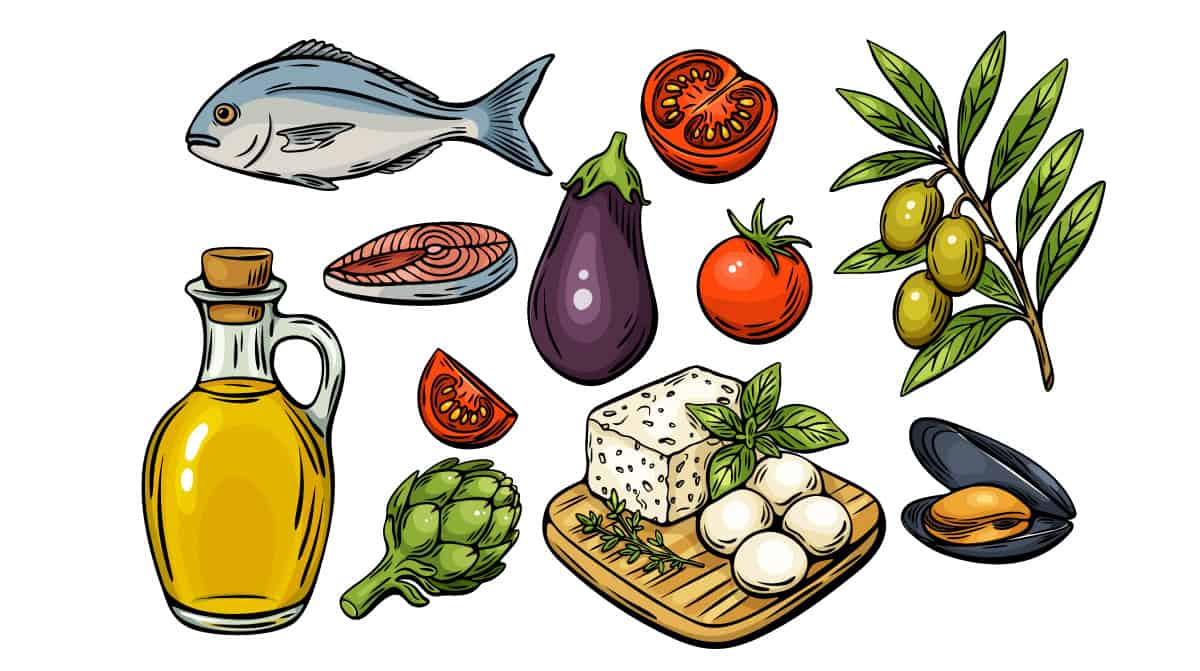
Explore the healthful “dietary patterns” advised by the USDA. They advise the Healthy Mediterranean-Style Dietary Pattern and the Healthy Vegetarian Dietary Pattern. Both are dietary patterns that are well-supported by considerable research evidence for supporting good health, longevity, and a healthy body weight. The Mediterranean-Style Dietary Pattern is heartily endorsed by the American Heart Association due to the clear association between this style of eating and heart health. These dietary patterns are not prescriptive, and they give you lots of leeway in choosing your own foods and how they’re prepared. Both are described in Appendix 3 of the USDA 2020-2025 Dietary Guidelines.
Veggies are an important part of the Mediterranean Diet.
Take-Home Message
There are lots of reasons to add more veggies to your diet, and 9/10 of us could do much better at it. Try these 5 “secret” ways to add more veggies to your daily intake.