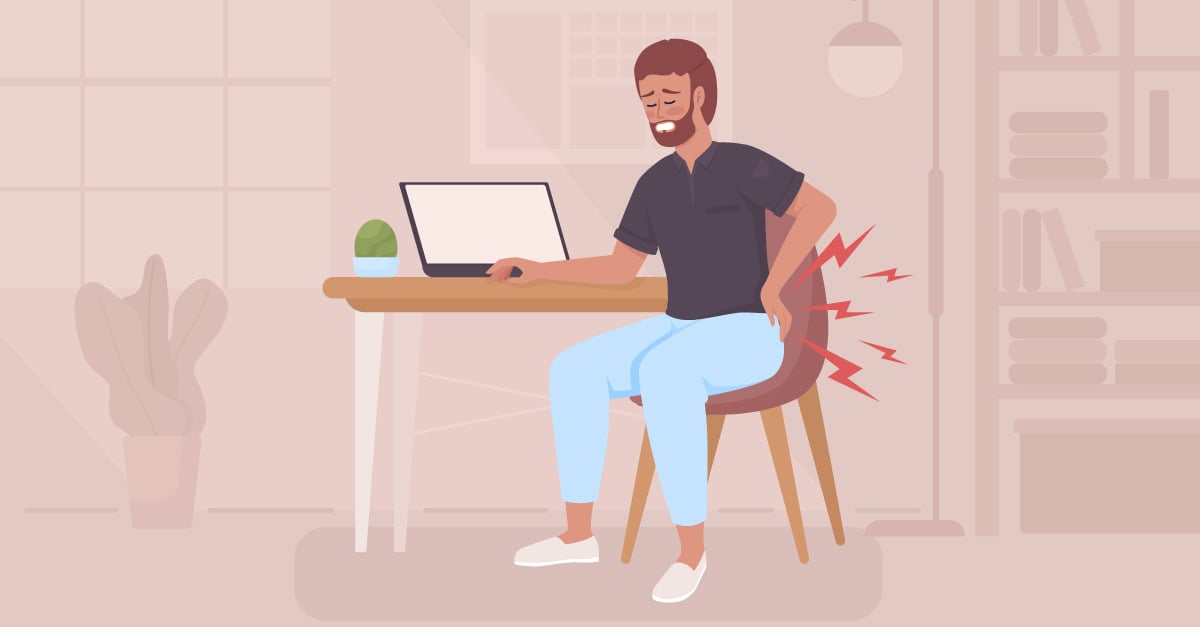
Anyone who’s experienced lower back pain knows how debilitating it can be. Even simple day-to-day activities can be excruciating.
Lower back pain is no trivial problem; it’s the leading cause of disability and loss of productivity in the world. It’s seen in all age groups and all levels of income, with a lifetime prevalence of up to 84% of the adult population. In any 6-month period, about 11% of the population will experience a period of disabling lower back pain.
Pain medications, non-steroidal anti-inflammatory drugs (NSAIDs), antispasmodics, and anticonvulsants can help with the discomfort, but they seldom completely alleviate the pain, especially when you have to move or try to function in your day.
Other medical interventions may help, such as ultrasound treatments, transcutaneous electrical nerve stimulation (TENS), and laser treatments. But there is no cure-all, so we need to have a collection of tools we can use to get back on our feet.
Fortunately, we have another treatment option for lower back pain that’s well supported by research evidence: stretches that we can do at home. Proper stretches loosen stiff back muscles and the muscles in the butt, hips, and legs that pull on the lower back. These stretches also mobilize the intervertebral discs (the cushions between the bones of the spine) and may therefore also reduce traction on the spinal nerves in people who suffer from sciatica (pinched nerves in the lower back).
Stretches for Lower Back Pain
Because of the prevalence of lower back pain as a source of acute and chronic pain and disability, and the relative ineffectiveness of medications, the medical research community has assigned much focus to adjuvant treatments, including stretching and exercise. Because of that, we have lots of quality research evidence supporting what does and doesn’t work. Let’s look at five stretches and tips that are supported by research.
Tip #1—Use Exercises That Strengthen While They Stretch
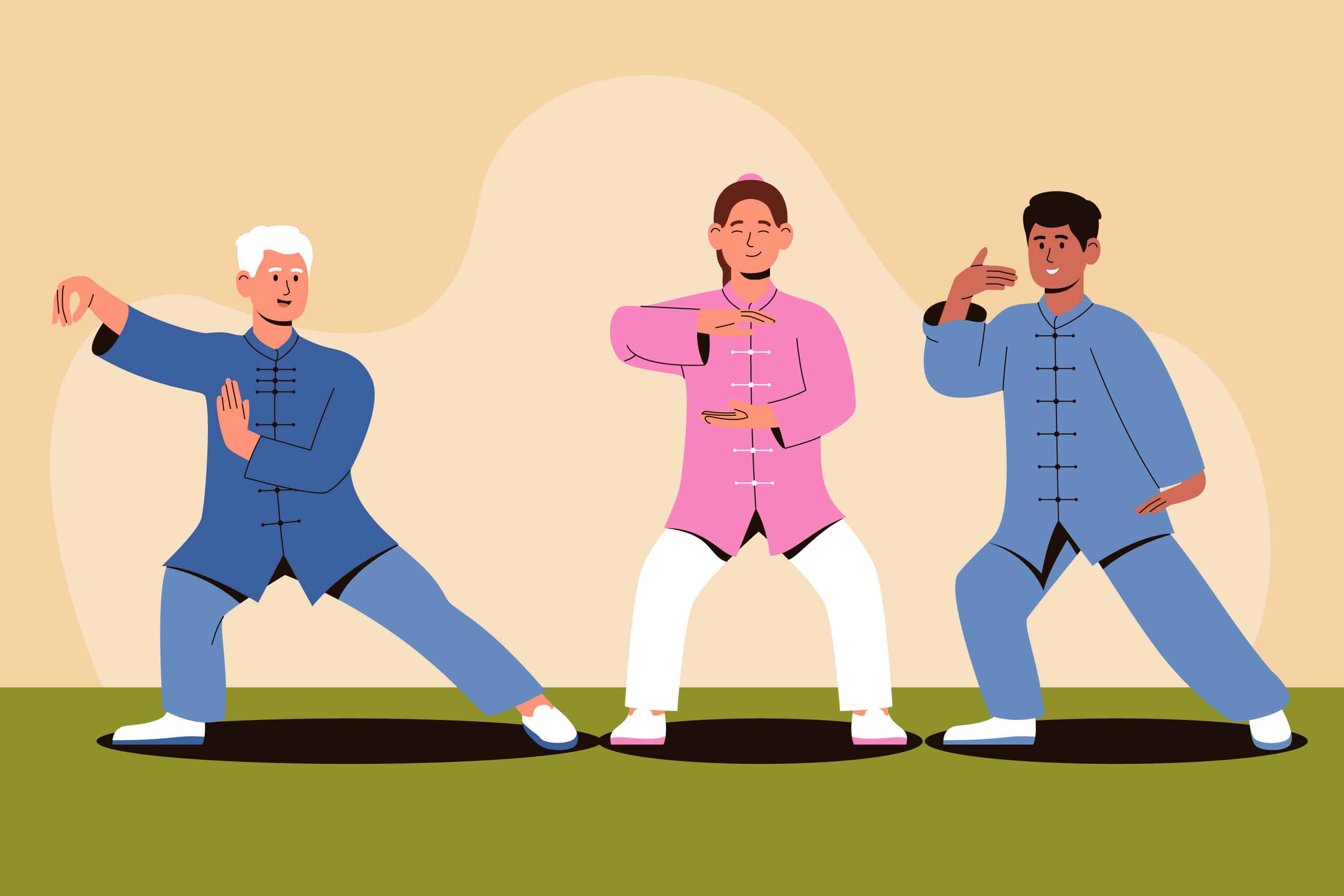
A recent comprehensive review of the research has found that exercises that strengthen as well as stretch produce a significant reduction in lower back pain. For example, they found that the practice of Tai Chi is associated with a significant reduction in chronic lower back pain in adults. Tai Chi is a Chinese mind-body exercise program that focuses on stress reduction, balance, flexibility, and strength. The exercises are low-impact, gentle, and slow, making them ideal for people with pain. The focus on stress reduction may play a significant role in pain reduction, due to the well-established link between stress and pain perception.
Tai Chi exercises.
The study also found that Pilates and yoga are effective in reducing lower back pain due to their combination of dual stretching and strengthening of the lower back and other core muscles. The study found that the optimal exercise duration is 15 to 30 minutes three times per week, which is enough to relax the muscles, enhance core muscle strength, and improve flexibility, while avoiding muscle fatigue and discomfort.
Tip #2—Use the Knee-to-Chest Stretch
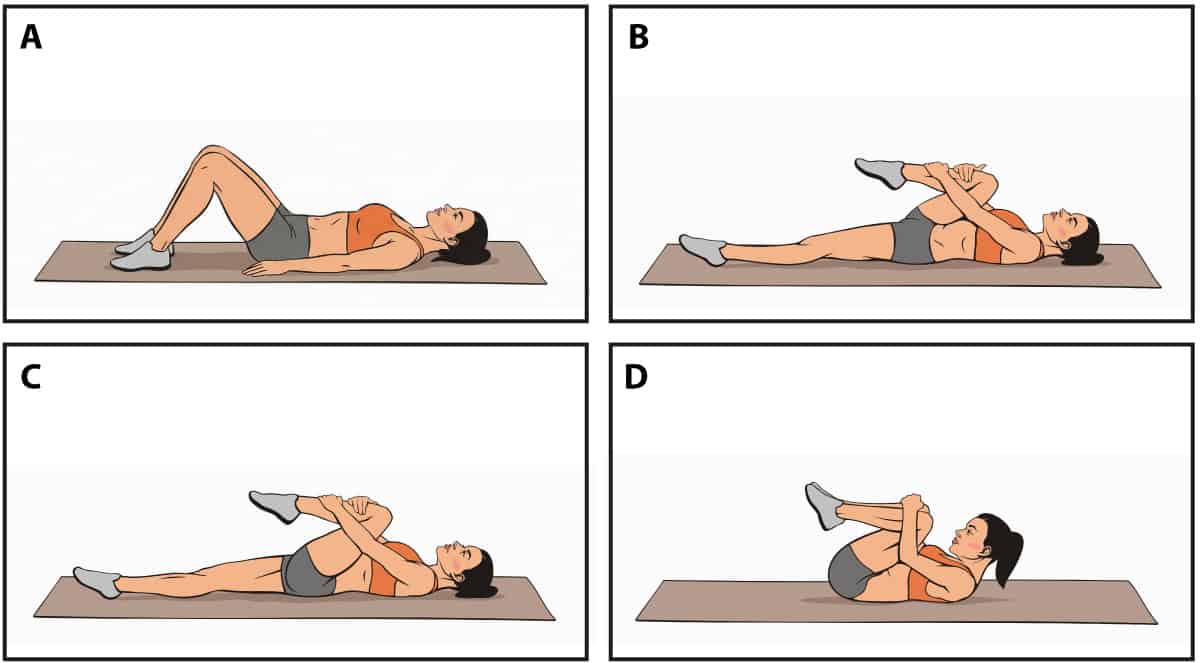
To begin, lie flat on the floor on your back, knees bent, feet flat on the floor (image A). Flatten your back against the floor, clasp both hands around one knee, pull the knee as high on your chest as you can, and hold for 15 to 30 seconds (image B). Slowly lower the leg, and repeat with the other side (image C). The exercise may also be performed by pulling up both legs at once (image D). Breathe throughout the stretch!
Tip #3—Use the Rotational Stretch
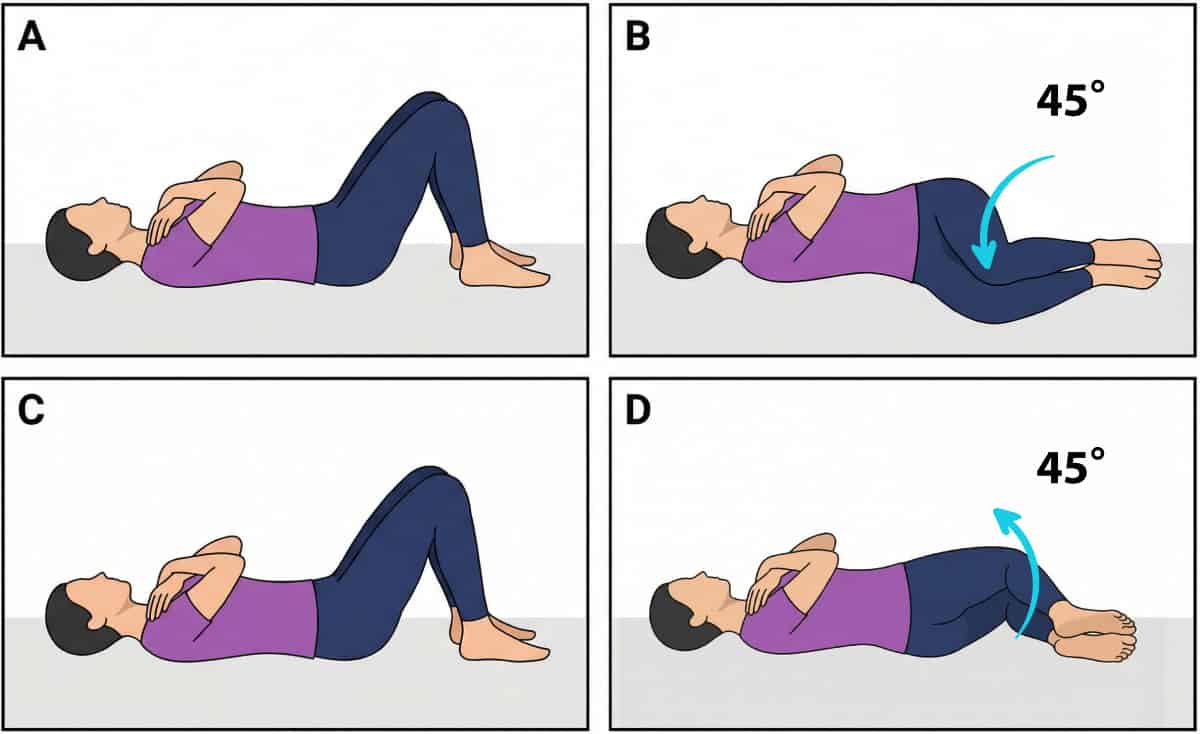
Lie flat on the floor on your back, knees bent, feet flat on the floor (image A). Roll your knees about halfway to one side, keeping your shoulders flat on the floor, and hold for 15 to 30 seconds (image B). Return to neutral (image C), and repeat on the other side (image D).
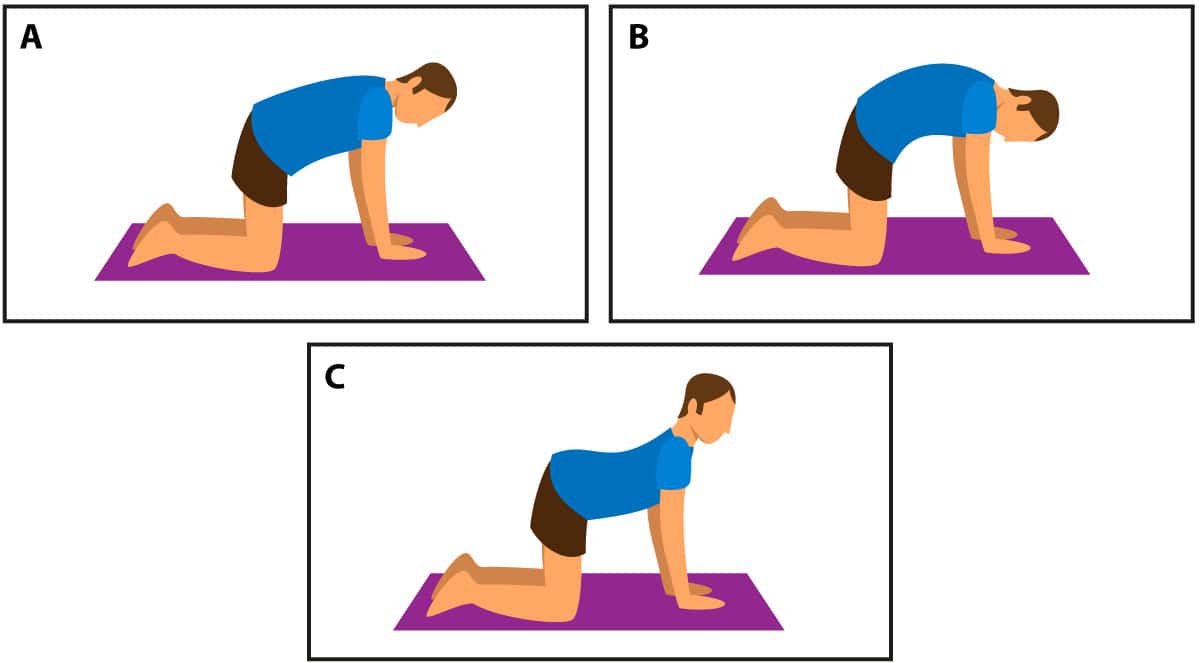
Tip #4—Use the Cat Stretch
Get down on all fours on the floor (image A). Arch your back toward the ceiling as high as you can, bending your head forward (image B). Then, arch your back the opposite way, pushing your tummy toward the floor and lifting your head upward (image C). In each case, hold your arched pose for 15 to 30 seconds.
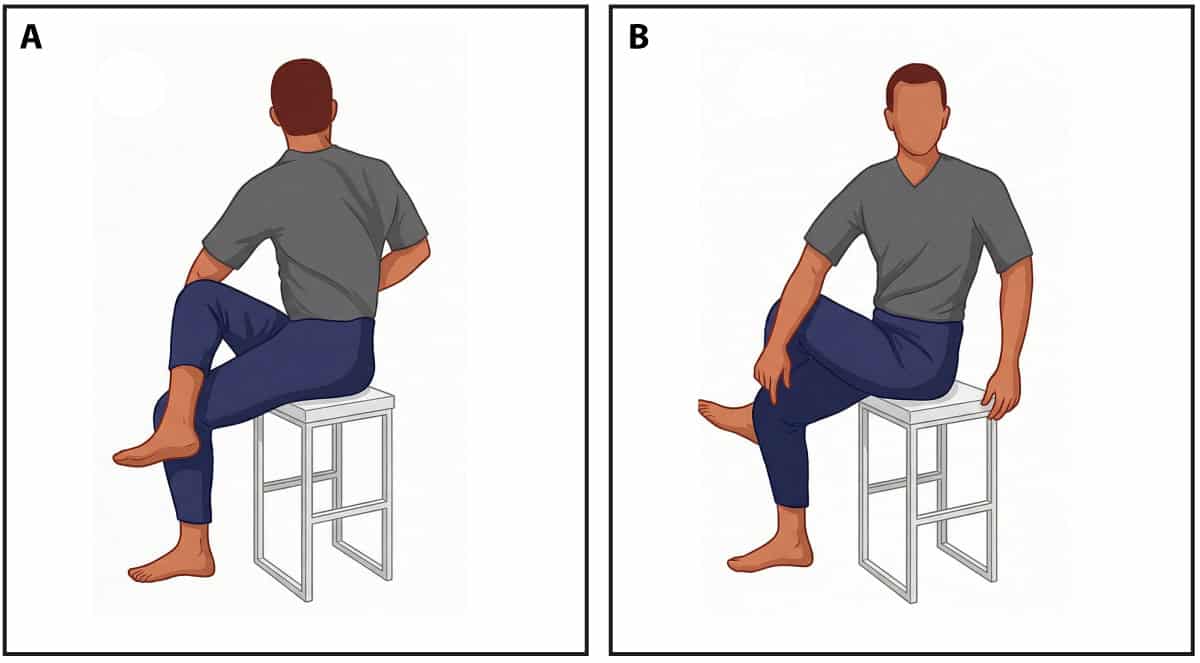
Tip #5—Use the Seated Lower Back Rotational Stretch
Sit on a stool or armless chair. Cross one leg over the other, brace your opposite elbow over your knee, and twist toward your crossed leg as far as you can go (image A). Hold the stretch for 15 to 30 seconds, then repeat on the other side (image B).
Take-Home Message
Stretching—especially when combined with strengthening—is a research-proven way that you can prevent and reduce lower back pain and improve your function in day-to-day activities. Repeating each stretch several times in a session and stretching three times a week will help prevent painful spasms in your lower back and other problems associated with muscle tightness, and may help relieve pressure on pinched nerves.